“IANB can fail despite correct placement; lip numbness is not proof of pulpal anesthesia; onset may be delayed; hot teeth are harder to anesthetize; supplemental techniques can improve success.”
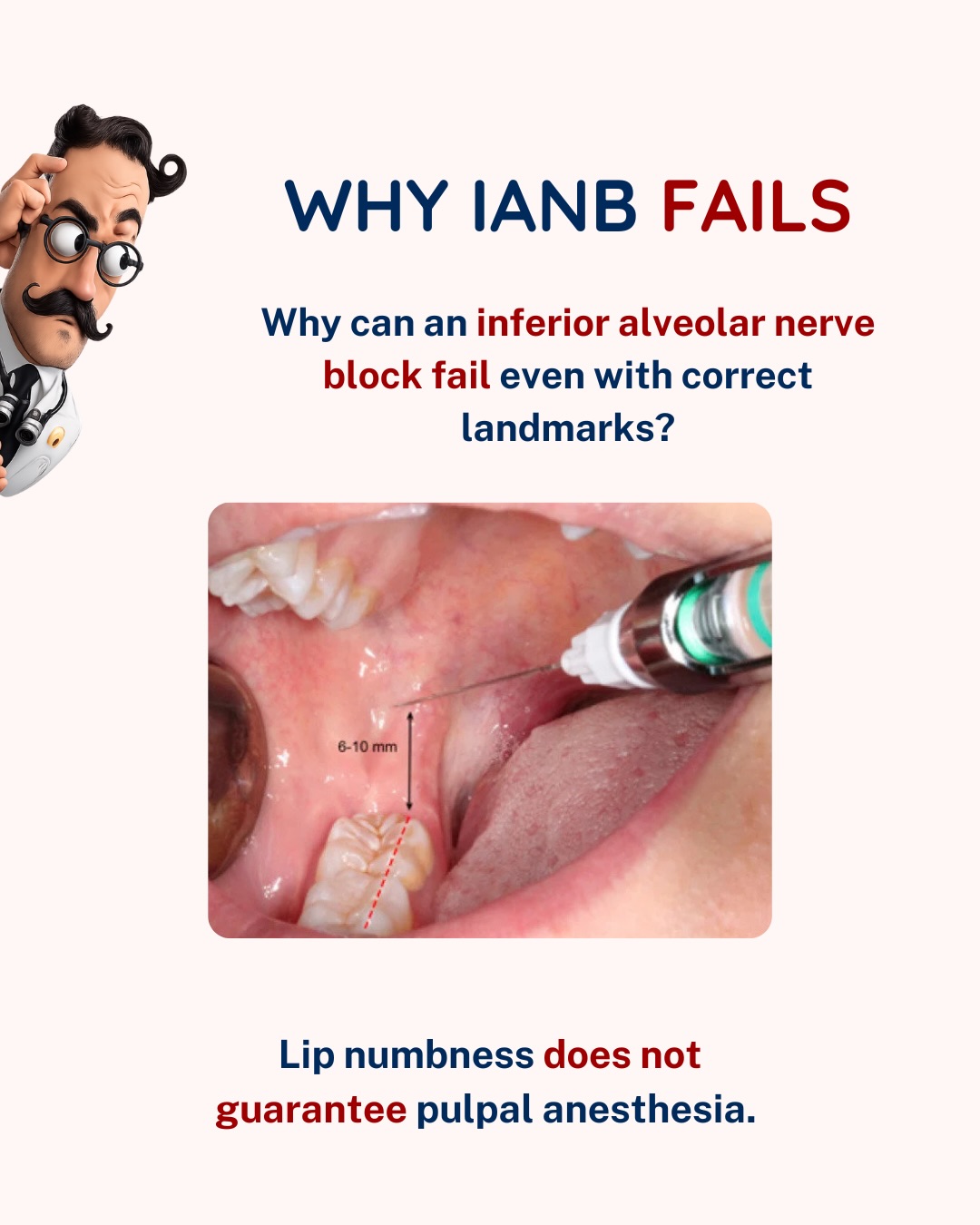
@denta_lschool6 slides analyzed by Clear
“Numb lip, not necessarily numb pulp—the post’s main clinical message holds up.”
Independent clinical research finds that lip numbness is not a dependable indicator of pulpal anesthesia. The cited delayed-onset figures and 19%–56% IANB-alone success range in irreversible pulpitis match an American Association of Endodontists evidence review. Reviews also support supplemental approaches, including articaine infiltration and intraosseous or intraligamentary injections, as ways to improve anesthetic success after inadequate IANB.
The slide’s approximately 88% articaine-infiltration figure needs narrower context: the AAE review reports 88% in mandibular first molars after IANB in one setting, but reports only 58% success for supplemental articaine infiltration in irreversible pulpitis. It should not be read as a universal hot-tooth success rate.
Not material to the central takeaway. The post’s main conclusion—that pulpal anesthesia must be assessed and supplemental anesthesia is often useful when IANB is inadequate—remains supported, although individual percentages should be applied cautiously.
Why Clear says this
The post accurately distinguishes soft-tissue numbness from pulpal anesthesia, recognizes delayed onset and true block failure, and correctly emphasizes the difficulty of anesthetizing mandibular teeth with irreversible pulpitis. Its numerical claims largely track the AAE review; newer systematic reviews continue to find that anesthetic success varies across drugs and protocols and that evidence quality for some comparisons is limited.
Evidence
- A clinical study found lower-lip numbness was not an indicator of pulpal anesthesia in tested mandibular molars and lateral incisors.
- The AAE review reports delayed pulpal onset after 15 minutes in about 19%–27% of mandibular teeth and after 30 minutes in about 8%, plus IANB-alone success of 19%–56% in irreversible pulpitis.
- A systematic review and network meta-analysis found articaine can improve IANB success versus lidocaine in irreversible pulpitis, while results differ by anesthetic and protocol.
- AAE-reviewed data support intraosseous and intraligamentary supplemental injections, but reported success rates are study-specific rather than universal.