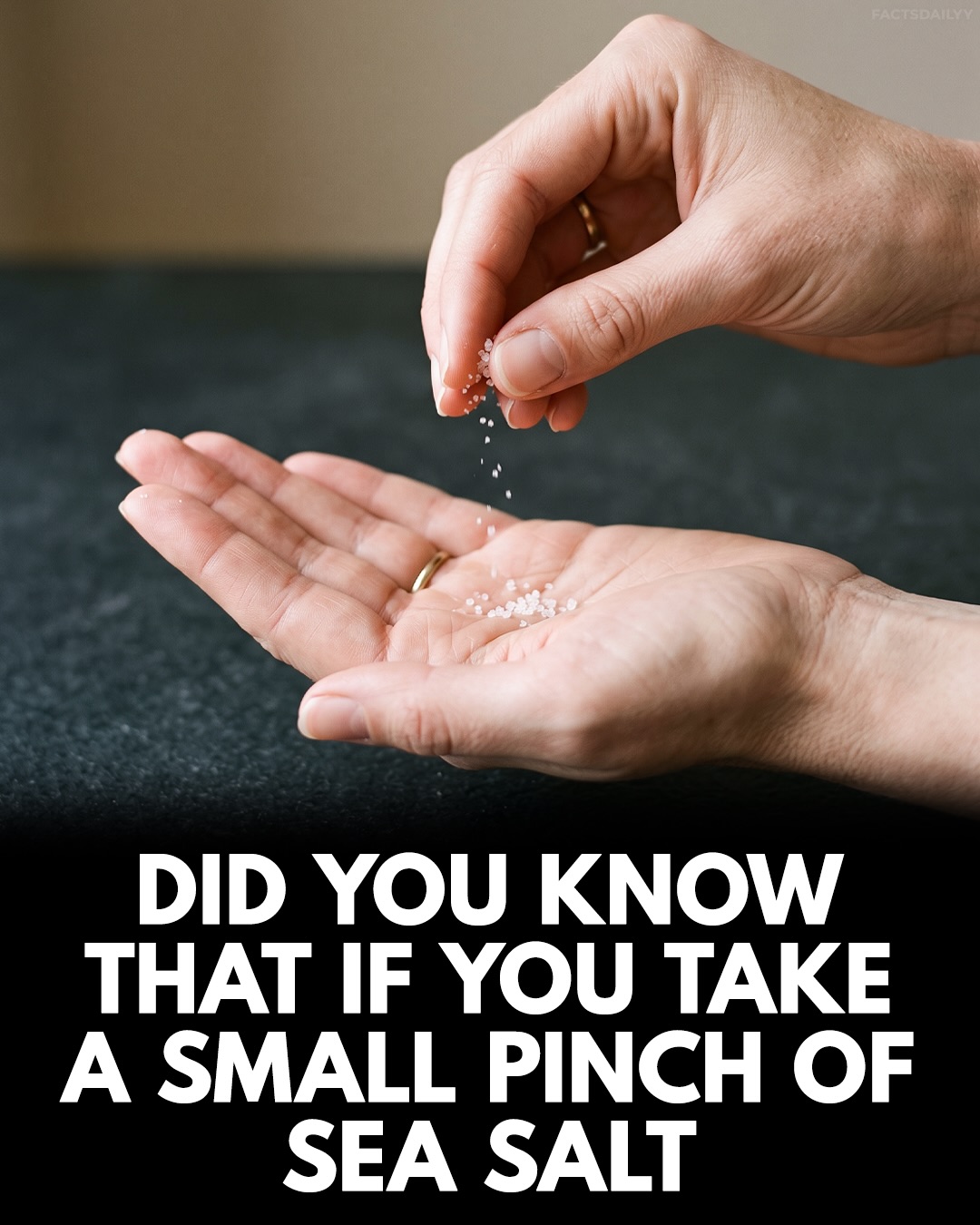
“A small pinch of sea salt under the tongue followed by water will make a headache disappear within five minutes by restoring electrolytes, reducing brain blood-vessel swelling, and shutting down migraine pain signals.”
@factsdailyy8 slides analyzed by Clear
“Hydration can help some headaches, but salt is not a five-minute migraine off switch.”
Sodium is an electrolyte involved in fluid regulation and normal nerve and muscle function. Dehydration can contribute to headaches, and replacing fluids—and, after prolonged heavy sweating, sometimes electrolytes—can be appropriate. ([medlineplus.gov](https://medlineplus.gov/lab-tests/sodium-blood-test/?utm_source=openai))
No reliable clinical guidance supports sublingual sea salt as a treatment that reliably resolves a headache in five minutes. Migraine treatment guidance includes fluids as a comfort measure, especially with vomiting or dehydration, but recommends individualized acute treatments rather than salt as a mechanism to stop migraine pain. ([ninds.nih.gov](https://www.ninds.nih.gov/Disorders/All-Disorders/Migraine-Information-Page?utm_source=openai))
The missing limits are central, not minor: most headaches and migraines are not proven sodium-deficiency problems, ordinary activity usually does not require electrolyte replacement, and the post turns a possible dehydration remedy into a universal rapid cure. ([cdc.gov](https://www.cdc.gov/niosh/bulletin/2011/heat2.html?utm_source=openai))
Why Clear says this
The central takeaway is a guaranteed, rapid headache and migraine treatment with a specific physiological explanation. Authoritative sources support hydration for dehydration-related symptoms but do not support the claimed five-minute result, sublingual-salt method, or brain-vessel mechanism. New, sudden, severe, or neurologically accompanied headaches need medical assessment rather than self-treatment alone. ([ninds.nih.gov](https://www.ninds.nih.gov/Disorders/All-Disorders/Migraine-Information-Page?utm_source=openai))
Evidence
- MedlinePlus states that sodium helps control body fluid and supports normal nerve and muscle function. ([medlineplus.gov](https://medlineplus.gov/lab-tests/sodium-blood-test/?utm_source=openai))
- CDC/NIOSH advises water for shorter moderate heat activity and balanced electrolyte drinks only after sweating for several hours; it notes electrolyte drinks are often unnecessary for ordinary hydration. ([cdc.gov](https://www.cdc.gov/niosh/bulletin/2011/heat2.html?utm_source=openai))
- The National Institute of Neurological Disorders and Stroke lists dehydration as one possible headache contributor and describes migraine treatment as including fluids, rest, and acute medicines—not sublingual salt. ([ninds.nih.gov](https://www.ninds.nih.gov/Disorders/All-Disorders/Migraine-Information-Page?utm_source=openai))
- The American Migraine Foundation identifies hydration as helpful for dehydration-triggered headaches but describes established migraine treatments separately. ([americanmigrainefoundation.org](https://americanmigrainefoundation.org/resource-library/migraine-home-remedies/?utm_source=openai))