“Early humans' use of psilocybin mushrooms helped drive the development of language, mythology, religion, culture, and consciousness.”
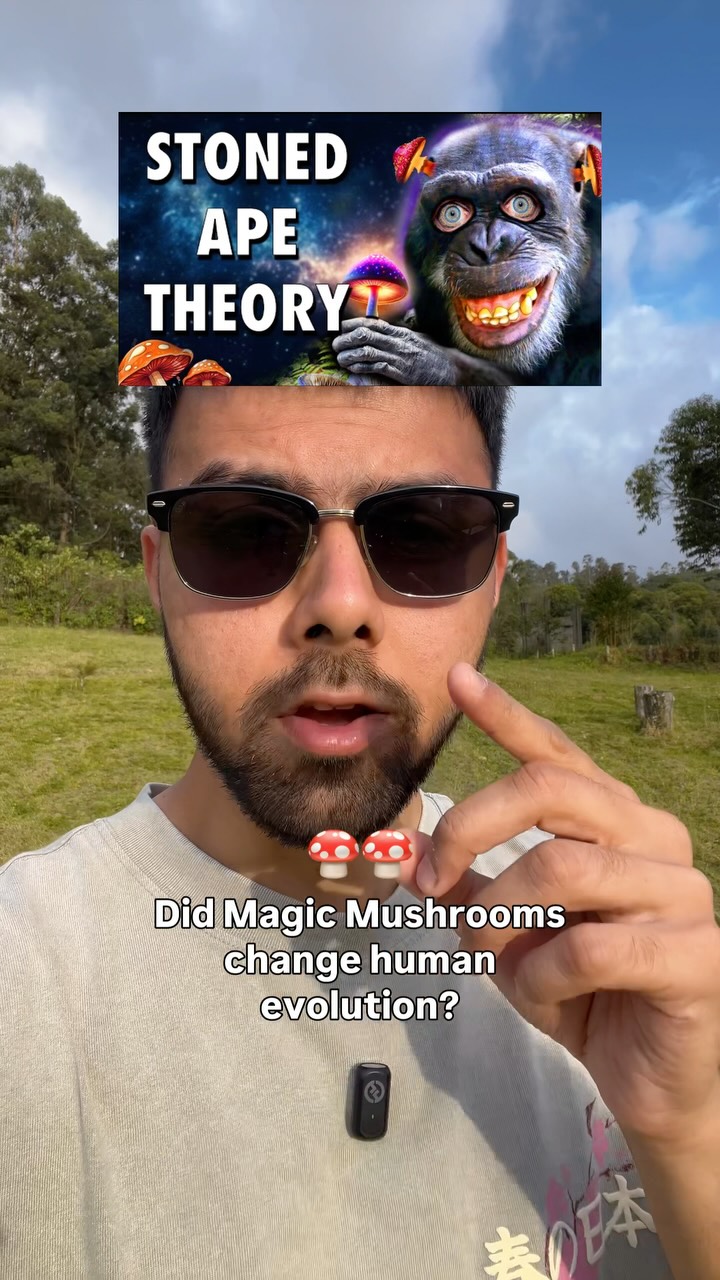
@kartik_jajooReel analyzed by Clear
“An evocative origin story, but the evolutionary leap remains unproven.”
Psilocybin is converted in the body to psilocin and acts on serotonin-related brain systems. Indigenous peoples in Mesoamerica have documented ceremonial traditions involving Psilocybe mushrooms extending back millennia. Scholars have proposed, but not resolved, psychoactive candidates for Soma.
The post's evolutionary storyline is not evidence that mushrooms caused or substantially drove language, religion, or consciousness. There is no direct evidence that ancient hominins consumed psilocybin mushrooms, let alone that use changed inherited cognitive traits or determined human cultural evolution.
The post repeatedly frames the account as McKenna’s idea and uses terms such as may, perhaps, and could. Although it should more plainly state that the causal narrative lacks direct evidence, its speculative framing prevents that omission from materially converting the central message into a settled factual claim.
Why Clear says this
A peer-reviewed evolutionary discussion finds no incontrovertible direct evidence of psychedelic-mushroom ingestion by ancient humans and says a simple account in which psilocybin caused the emergence of human cognition and culture is false. It offers a broader possible model for future testing, rather than confirmation. Therefore, the core causal claim cannot responsibly be verified.
Evidence
- The pharmacology claim is supported: psilocybin is converted to psilocin and affects serotonin processing.
- Archaeological, historical, and living cultural evidence supports long-term ceremonial Psilocybe use in parts of Mesoamerica, with estimates reaching roughly 3,000 years.
- No direct archaeological, genetic, or fossil evidence demonstrates psilocybin use by early hominins or a causal role in the evolution of language, religion, or consciousness.
- Soma was central to Vedic ritual, but its source plant has not achieved scholarly consensus; mushroom identification remains one proposed interpretation.