“Europe has broadly declared a war alert against Russia, with almost all nations urgently preparing citizens for something very bad.”
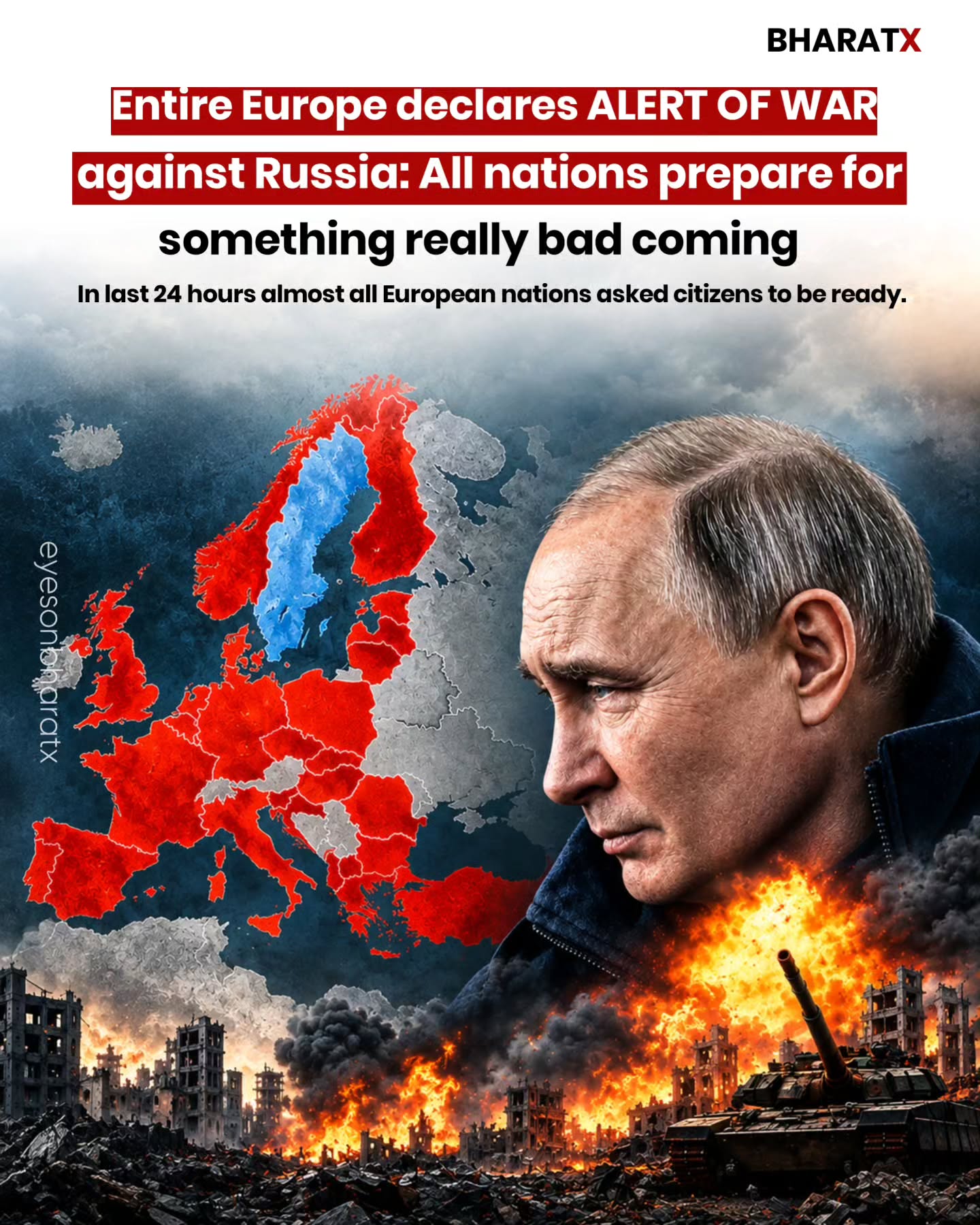
@eyesonbharatx5 slides analyzed by Clear
“Preparedness is real; a continent-wide war alert is not.”
Europe is strengthening preparedness for cyberattacks, infrastructure disruption, extreme weather, hybrid threats and potential military crises. The European Commission has promoted 72-hour household self-sufficiency, while countries including the UK, Sweden and the Netherlands provide or plan public-resilience guidance. NATO and European states are also reinforcing deterrence and civil preparedness in response to Russia's war against Ukraine and hostile activity.
The headline overstates these varied, often long-running measures as an alert declared by the entire continent against Russia. EU preparedness guidance covers many hazards, not just war; it is not a declaration that war is imminent. The claim that almost all European nations made such requests in the last 24 hours is unsupported by the official material reviewed. Several cited-style measures are country-specific, planned for future years, or predate the post's implied emergency.
The omitted distinction between routine/all-hazards resilience, long-term defence planning and an immediate war warning materially changes the likely audience takeaway from prudent preparation to belief that a Europe-wide conflict is about to begin.
Why Clear says this
There is a substantial factual basis for saying Europe is preparing more seriously for disruption and conflict-related risks. But the post visually foregrounds an imminent, continent-wide war alert while grouping separate policies from different dates and purposes. That framing exaggerates what official sources establish, even though its caption includes a partial correction.
Evidence
- The European Commission's March 26, 2025 Preparedness Union Strategy encourages at least 72 hours of essential supplies as part of all-hazards preparedness, including climate, natural-disaster, cyber, geopolitical and hybrid risks.
- The UK has announced a public resilience campaign and a Home Defence exercise planned for 2027; official descriptions frame them around hybrid attacks and broad resilience, not an imminent war declaration.
- Sweden's updated In Case of Crisis or War booklet is part of civil-defence preparedness and was commissioned in March 2024.
- The Netherlands officially recommends an emergency kit and supplies for emergencies, including water and non-perishable food.
- NATO identifies Russia as a major long-term threat and is strengthening its eastern-flank deterrence, but NATO describes these measures as defensive. Its public assessments discuss possible future risk horizons rather than saying a war is imminent.