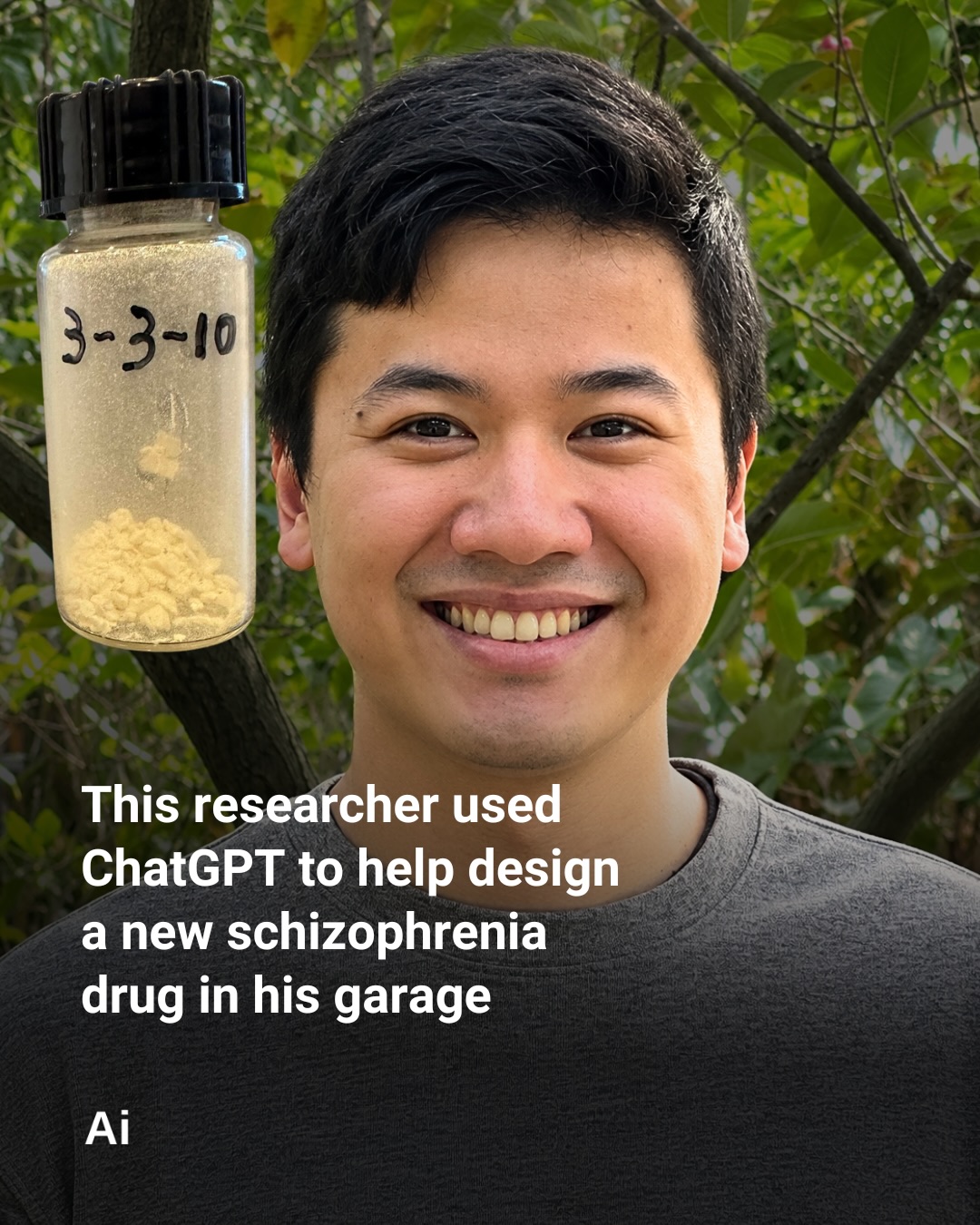
“Douglas Yao used ChatGPT to design and synthesize PAC-3310 in a garage lab, and PAC-3310 is a selective M4-targeting experimental schizophrenia drug with fewer side effects than Cobenfy.”
@artificialintelligence.co2 slides analyzed by Clear
“A garage synthesis is not yet evidence of a working schizophrenia treatment.”
Yao’s Harvard PhD is independently documented. Cobenfy is approved in the United States for adults with schizophrenia, and its xanomeline component preferentially targets muscarinic M1 and M4 receptors. Selective M4-directed treatments are a legitimate area of schizophrenia research.
The post presents PAC-3310 as a new schizophrenia drug and implies an improved side-effect profile without independently verifiable pharmacology, animal results, human trial results, manufacturing-quality testing, or regulatory review. A labeled vial and a social-media account do not establish what compound is present or how it works.
High. The missing independent evidence changes the reasonable takeaway from a verified drug-development advance to an unverified early-stage personal claim. The comparison also glosses over that Cobenfy’s efficacy and safety were evaluated in controlled clinical trials, while PAC-3310 has not been publicly substantiated that way.
Why Clear says this
The account’s claim may describe a real personal project, but the therapeutic assertions require evidence beyond a social-media post. Cobenfy’s M1/M4-related mechanism and clinical benefit do not demonstrate that another purported M4-selective compound is active, safer, or useful in schizophrenia. No reliable public trial registration or peer-reviewed PAC-3310 evidence was located in the checked sources.
Evidence
- Harvard’s repository records Douglas Yao’s October 2023 doctoral dissertation, supporting the Harvard PhD description.
- FDA labeling identifies Cobenfy as xanomeline plus trospium chloride, approved for schizophrenia in adults; it is not an M4-only drug.
- A randomized phase 3 trial found xanomeline-trospium improved schizophrenia symptom scores versus placebo, but also reported gastrointestinal and cardiovascular adverse events.
- Published research shows M4-selective modulation is a plausible research strategy, but that does not validate PAC-3310 specifically.
- The public PAC-3310 description located is attributed to Yao’s own social-media claim; independent validation of the compound and its proposed properties was not located.