“Pupper V3 is a Stanford robot dog that runs on a Raspberry Pi, can perform agile locomotion including walking, running and turning, and can be built from freely available code and designs.”
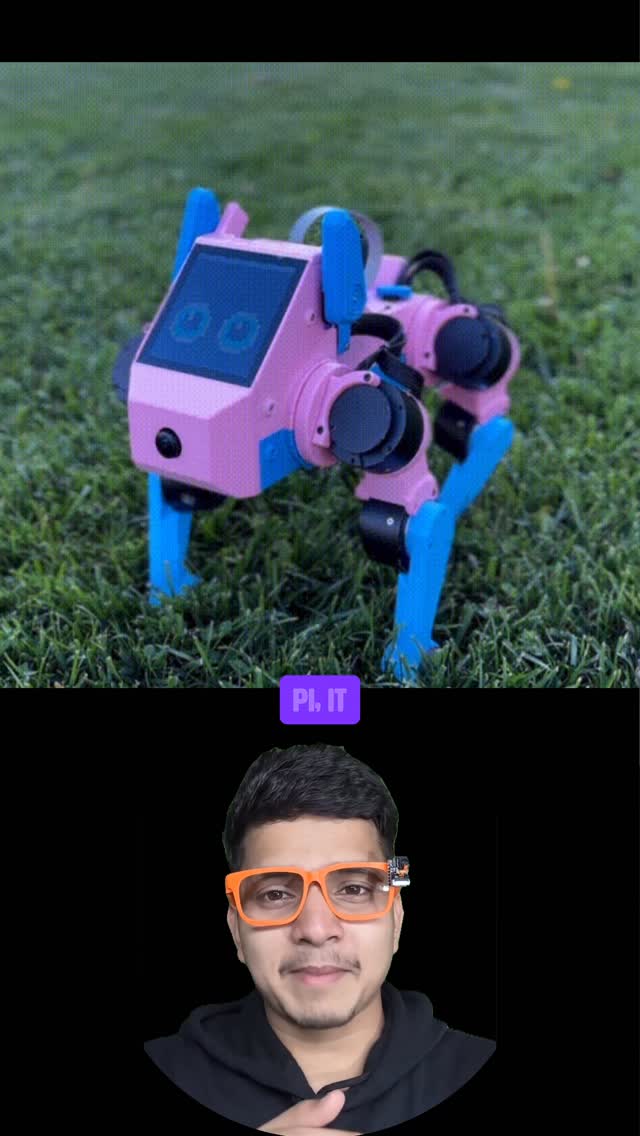
@vaishabhjalmiReel analyzed by Clear
“A real buildable robot dog, with the expensive parts being the only catch.”
Stanford's documentation identifies Pupper V3 as open source and provides build guidance. It lists a Raspberry Pi 5 and a reinforcement-learning locomotion policy. Stanford reporting and earlier technical research describe Pupper as a quadruped educational platform capable of dynamic locomotion, including stable walking, running, and turning.
Completely free could be misread if taken to mean free hardware: the V3 documentation estimates a self-built robot at about $2,000. Like a real dog is promotional shorthand, not a demonstrated equivalence in agility or balance.
These caveats do not overturn the main message that this is a capable, buildable open-source robot platform; the post says build your own rather than promising free physical hardware.
Why Clear says this
The core takeaway is well supported by Stanford's current Pupper V3 documentation and by technical documentation for the project. The shown capabilities are plausible and documented, while broad comparisons to a real dog should be read as enthusiasm rather than a precise performance claim.
Evidence
- Pupper V3's official documentation says everything is open source, provides sourcing and build guides, and identifies the project as a robotics and AI teaching platform.
- The Stanford Robotics Club repository lists Pupper V3 hardware including a Raspberry Pi 5 and an out-of-the-box reinforcement-learning locomotion policy.
- A published Pupper technical paper reports dynamic, omnidirectional locomotion, including tested forward, sideways, and turning performance.