“SaxonQ has built the first diamond-based quantum computer with more than ten qubits, using sulfur-assisted NV centers, without cryogenics.”
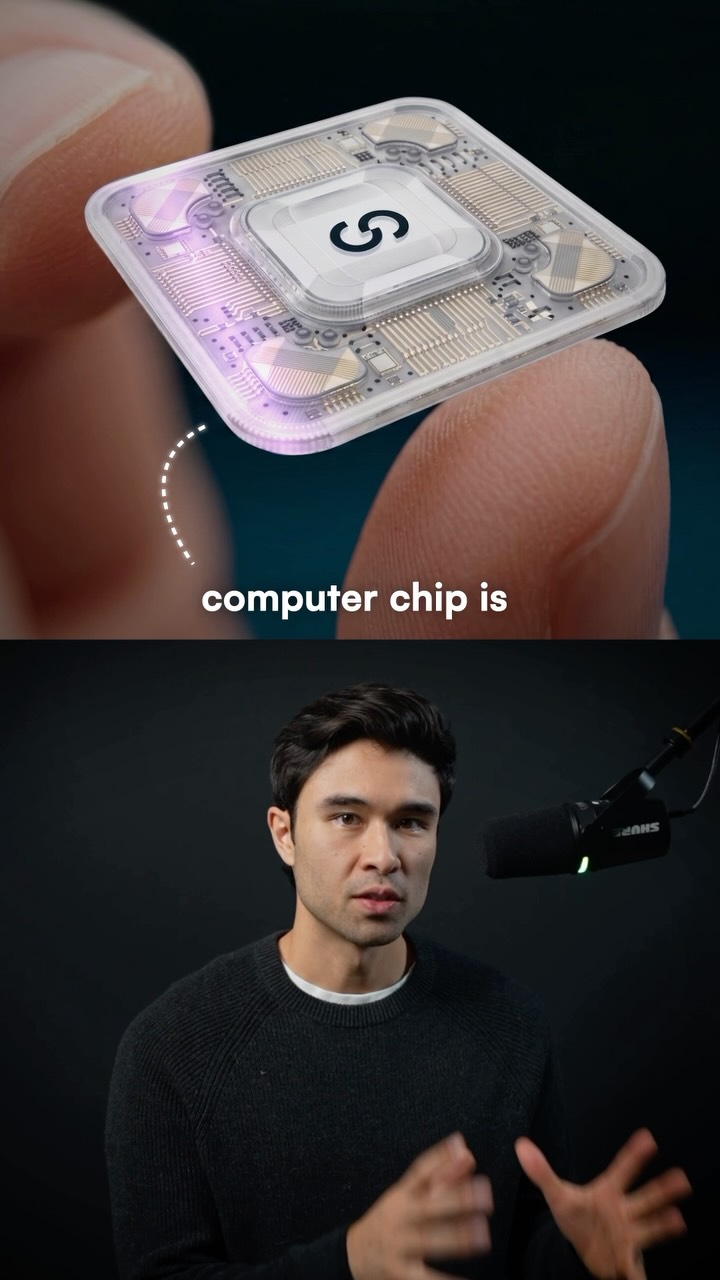
@rowancheungReel analyzed by Clear
“A promising diamond milestone, but the headline count stitches together much smaller quantum cores.”
NV centers are nitrogen atoms next to vacancies in diamond and can be optically initialized and microwave-controlled. Peer-reviewed research supports sulfur doping as a way to improve NV-center creation yield and stabilize the negative charge state. SaxonQ publicly states that its systems operate at room temperature and use standard electrical power.
The post leaves out that SaxonQ's advertised 128-qubit SXQ128 is organized as 16 separate cores with eight fully entangled qubits per core. That distinction matters: a collection of small cores is not equivalent to a demonstrated, fully connected 128-qubit quantum register. The 99.98% figure remains a company-reported single-qubit result rather than independently published system benchmarking.
Material. A reasonable viewer could infer that SaxonQ has demonstrated a single diamond quantum processor operating on more than ten interconnected qubits, whereas the disclosed architecture limits each fully entangled core to eight qubits and does not publicly establish cross-core entanglement or comparable system-level capability.
Why Clear says this
The basic materials science and the company's room-temperature product claims have support, so the post is not directly false. But its headline framing turns an aggregate physical-qubit count into a stronger impression of integrated quantum-computing scale than the disclosed architecture demonstrates. The caption's peer-review caveat helps, but does not supply the key architecture context.
Evidence
- A 2019 peer-reviewed Nature Communications study reported a 75% NV-center creation yield using charge-assisted defect engineering, with sulfur providing the strongest NV-negative charge stabilization among the donors tested.
- SaxonQ's August 2026 product announcement describes the SXQ128 as 128 qubits across 16 processing cores, with eight fully entangled qubits per core.
- Independent reporting notes that model-specific benchmark data, including cross-core performance and full fidelity distributions, have not been publicly published.