“Harvard researchers reversed aging by 75% in six weeks, restored vision, and are now beginning FDA-cleared human trials that could show human age reversal.”
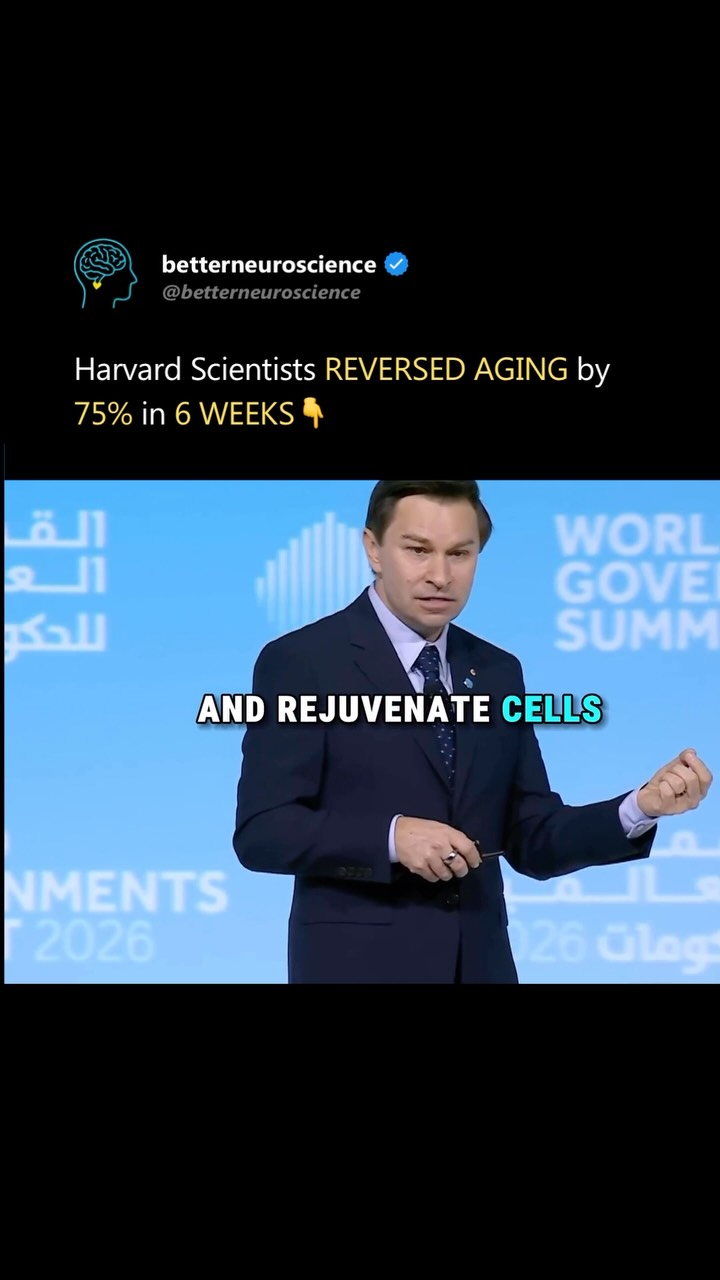
@betterneuroscienceReel analyzed by Clear
“A real mouse-eye experiment, but the headline fast-forwards past the human evidence.”
A 2020 peer-reviewed mouse study found that OSK expression in retinal ganglion cells restored younger-looking DNA-methylation and gene-expression patterns, promoted nerve regeneration, and improved vision in mouse glaucoma and aging models. A first-in-human ER-100 trial began in 2026 and is recruiting people with open-angle glaucoma or NAION.
The prominent claim that scientists reversed aging by 75% in six weeks overstates what the published evidence establishes. The key evidence concerns selected mouse retinal cells, specific molecular aging signatures, and vision-related function—not a demonstrated 75% reversal of whole-animal aging. The human trial is not testing whole-body rejuvenation or whether aging can be reversed; its primary purpose is safety and tolerability in up to 18 participants.
Material. The framing can reasonably leave viewers believing broad, near-confirmed age reversal has already occurred and is about to be validated in people. The actual evidence is localized preclinical work, while human efficacy and safety remain unknown.
Why Clear says this
The mouse findings support a promising, tissue-specific reprogramming approach, and the trial status is real. But translating a change in mouse retinal molecular markers and visual function into a claim that aging was reversed by a quantified percentage—or that human age reversal is now being tested—materially changes the scientific meaning. The trial started on March 2, 2026, but its expected primary completion is May 2027 and no results are posted.
Evidence
- The Nature mouse study reports OSK-driven restoration of youthful DNA-methylation patterns and transcriptomes, axon regeneration, and improved vision in mouse retinal ganglion cells; it does not establish whole-body age reversal by 75%. ([nature.com](https://www.nature.com/articles/s41586-020-2975-4))
- ClinicalTrials.gov lists ER-100 as a recruiting, first-in-human Phase 1 study of safety and tolerability for open-angle glaucoma and NAION, with planned enrollment of 18 people and no posted results. ([clinicaltrials.gov](https://clinicaltrials.gov/study/NCT07290244?intr=ER-100+epigenetic+therapy&utm_source=openai))
- Nature Biotechnology reported FDA clearance for this Phase 1 partial-reprogramming eye-disease trial, confirming authorization to begin testing rather than proof of benefit. ([nature.com](https://www.nature.com/articles/s41587-026-03037-z))