“Taking Dream On glycine is the solution for people who sleep a full night but wake exhausted, because it produces truly restorative sleep and improves falling asleep and nighttime awakenings.”
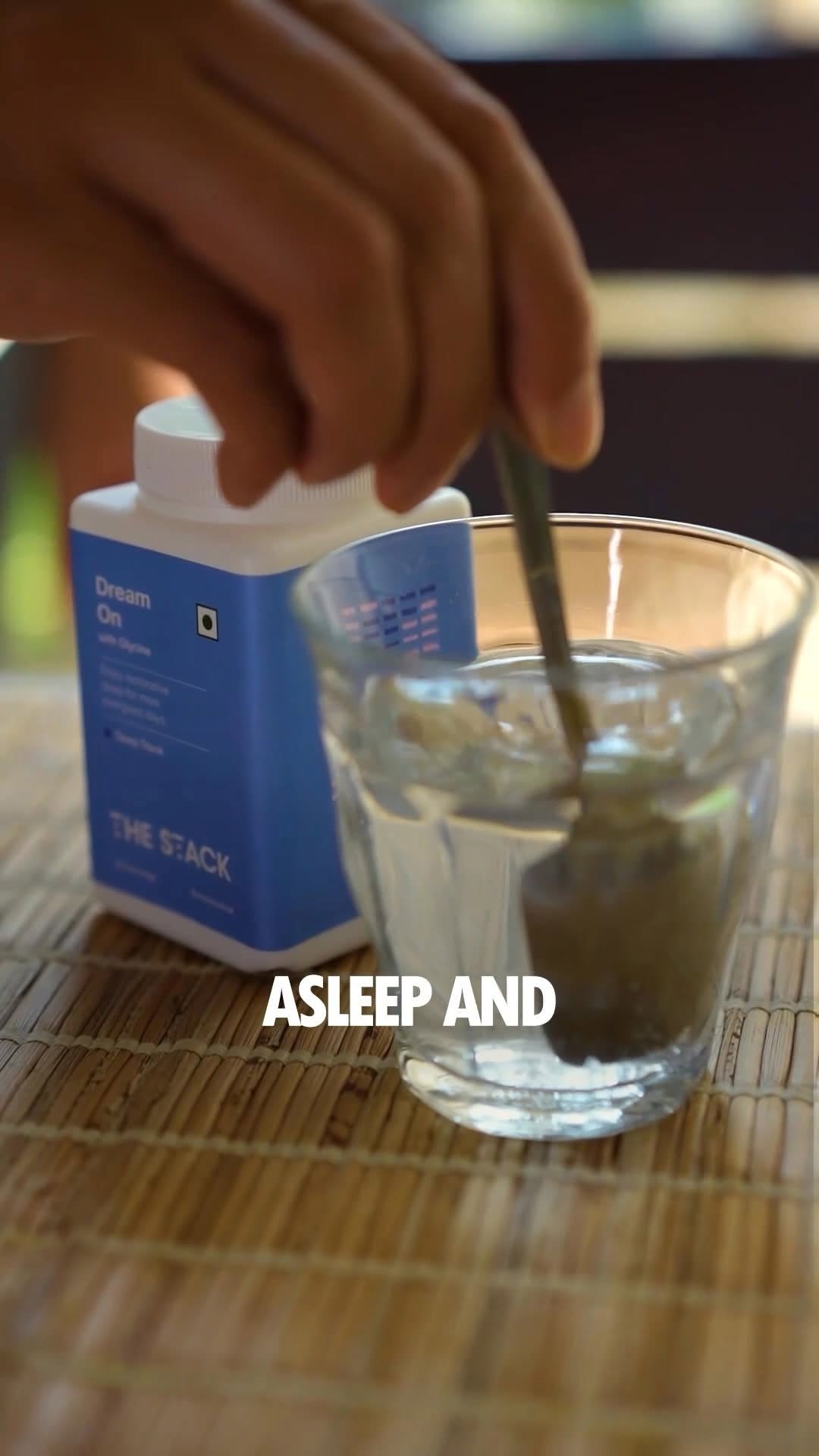
@thestack_clubReel analyzed by Clear
“A tiny sleep study is not a universal bedtime reset button.”
Small randomized crossover studies of about 3 grams of glycine before bed reported improvements in some self-reported next-day sleep-quality, fatigue, and alertness measures among adults with sleep complaints.,A small study also reported changes on polysomnography alongside subjective sleep improvements, so the idea is not baseless.
The evidence is far too limited to call glycine the solution for everyone who wakes exhausted. The available sleep studies were small, short, and the broader systematic review judged the evidence in healthy populations to carry overall high risk of bias.,The post turns preliminary findings about some sleep measures into a confident promise of 'truly restorative sleep.' That outcome has not been robustly established in large, independent trials.,Waking tired despite adequate time in bed can reflect sleep apnea, other sleep disorders, medication effects, mental-health conditions, or medical issues such as hypothyroidism. A supplement pitch should not imply one cause or one fix.,The observed post does not provide enough product-specific clinical evidence to show that its Dream On formulation produces the claimed results.
This is material because the post targets a broad symptom that can signal treatable health conditions, while presenting an under-studied supplement as a definitive answer. A reasonable viewer could delay appropriate assessment or expect a reliably restorative effect that the evidence does not support.
Why Clear says this
There is a factual kernel: glycine may modestly improve subjective sleep-related outcomes for some people. But the central takeaway is overconfident. A 2024 systematic review found that the relevant sleep, fatigue, and alertness evidence in healthy people came from small studies with high risk of bias, and it advised cautious interpretation. Major sleep-medicine guidance instead supports evaluating persistent sleep problems and using evidence-based treatment such as CBT-I for chronic insomnia. Persistent daytime tiredness after a full night can also be a symptom of sleep apnea or other conditions.
Evidence
- A 2024 systematic review found reported sleep-quality benefits from glycine, but concluded that evidence for sleep, fatigue, and alertness in healthy populations came from small studies with overall high risk of bias and should be interpreted cautiously.
- The often-cited 2006 randomized, double-blind crossover trial found better self-reported fatigue, liveliness, and clear-headedness after 3 grams of glycine at bedtime; it does not establish glycine as a universal treatment or prove a commercial product restores sleep.
- The American Academy of Sleep Medicine strongly recommends multicomponent cognitive behavioral therapy for chronic insomnia, based on a much larger evidence base than exists for glycine.
- NIH sources identify daytime tiredness despite sleep as a possible symptom of sleep apnea and note that unexplained drowsiness can have multiple medical, sleep-related, and medication-related causes.