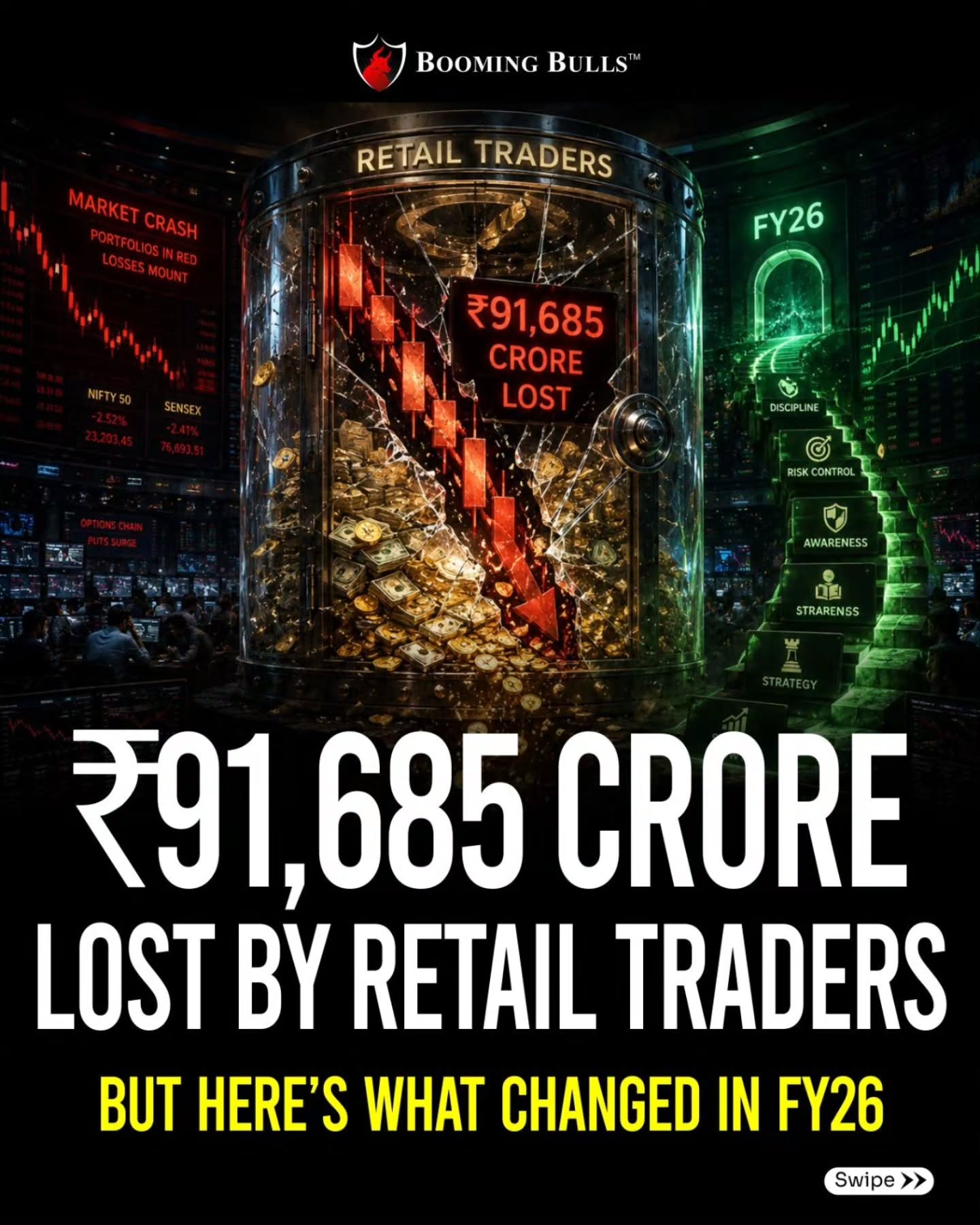
“SEBI’s F&O measures materially reduced retail traders’ losses and changed the game in FY26.”
@boomingbulls4 slides analyzed by Clear
“Smaller total losses are not the same as safer F&O trading.”
The reported aggregate-loss figure of ₹91,685 crore and an approximately 18% year-over-year decline support the narrow claim that total losses fell. SEBI did introduce index-derivatives restrictions intended to curb speculative activity.
The post makes the aggregate decline sound like clear proof that retail trading became safer because of SEBI’s rules. The trader count also fell substantially, so lower total losses alone cannot show lower risk or establish causation. Earlier SEBI-linked FY25 evidence found 91% of individual derivatives traders still lost money, with average losses rising.
Material. A reasonable viewer could infer that remaining retail F&O traders are now doing materially better, when the aggregate reduction may largely reflect fewer participants and does not demonstrate improved outcomes per trader.
Why Clear says this
Government and SEBI materials document the regulatory measures and say their effects require continued monitoring. Independent reporting on SEBI’s FY25 analysis found participation fell while average losses per individual rose. That makes the post’s causal, success-oriented framing stronger than the available evidence supports.
Evidence
- India’s Finance Ministry said SEBI’s October 2024 measures targeted speculative F&O trading, but stated their impact would continue to be monitored.
- SEBI’s FY22–FY24 study found 93% of individual F&O traders incurred losses over that period.
- Reporting on SEBI’s FY25 analysis found 91% of individual derivatives traders made net losses; it also reported average individual losses rose to about ₹1.1 lakh even as participation declined.