“A new prison method scans a victim’s memory and implants a false version into a convicted person to create guilt.”
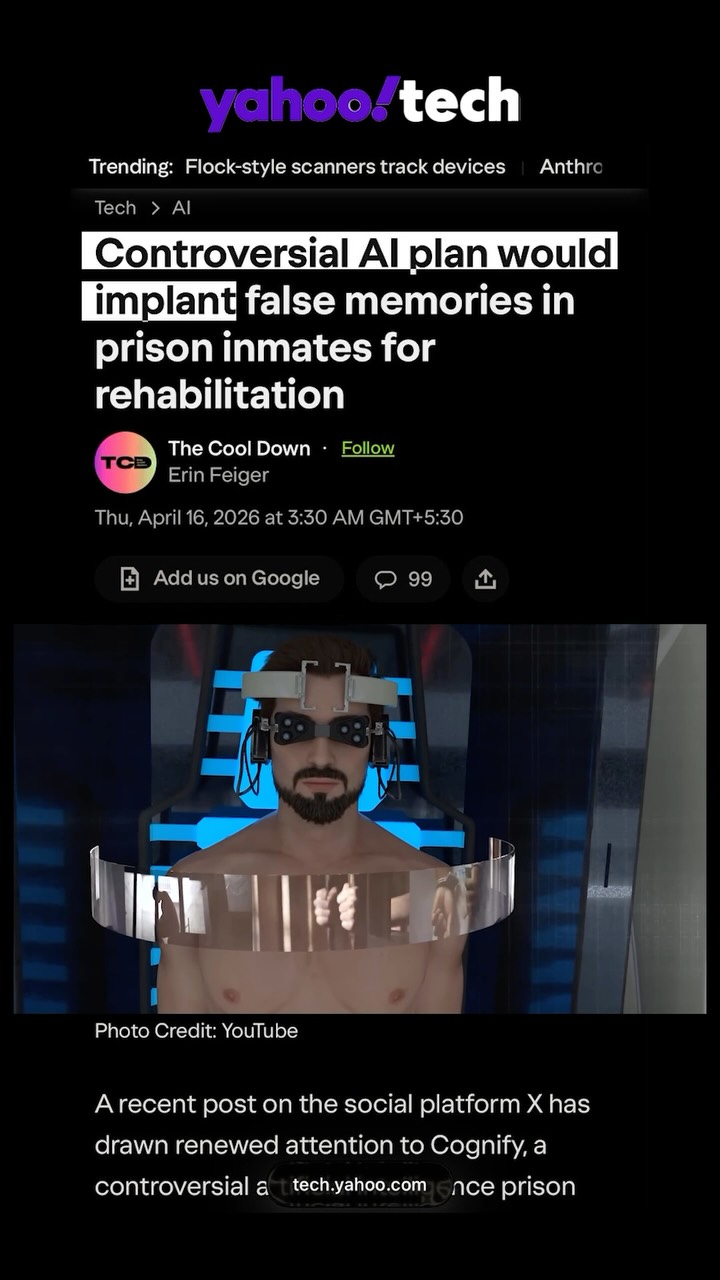
@parasmadan.inReel analyzed by Clear
“Brain implants can treat disease; they cannot currently transfer victims’ memories or establish guilt.”
Human memory is fallible, and psychological research shows that suggestion can sometimes lead people to form false autobiographical memories. Brain implants are also used or studied for certain medical purposes.
Current science cannot scan a person’s detailed autobiographical memory, copy it into another person’s brain, or implant a tailored false memory to make someone experience guilt. There is no credible evidence of prisons using such a system.
The unsupported technology is the entire premise, so this is not a minor missing caveat.
Why Clear says this
Research on false memory concerns suggestion and memory distortion, not extracting one person’s memories and writing them into another brain. Reviews of memory editing describe the cinematic version as largely fiction, while current implanted neurotechnology is medically focused and limited.
Evidence
- A 2022 review found false autobiographical memories can arise through experimental suggestion, but this does not involve brain scanning or neural memory transfer.
- A Nature review states that science-fiction-style memory editing has mostly remained fiction; applying methods that alter simple memories in animals to humans has proved elusive.
- A review of brain-based memory detection concluded that pursuing courtroom admissibility is presently misguided, reflecting major limits on detecting memories from brain data.
- FDA materials describe implanted brain-computer interfaces and neurological devices in therapeutic contexts such as paralysis, disease, and injury—not transferring memories or determining guilt.